
There is a quiet pressure that shows up in a lot of beauty content: the expectation that a woman should look effortlessly put-together every single day. Soft skin, neat hair, natural-looking makeup that somehow never needs adjustment, and an overall appearance that suggests she woke up that way.
I used to sell products that promised exactly that result. I also watched how the promise landed on real women who had early alarms, long commutes, dry office air, and limited time. The gap between the ideal and the actual day was often wide.
This post is a straightforward rejection of the idea that effortless is the standard we should hold ourselves to on ordinary workdays.
Where the “Effortless” Ideal Comes From
The word itself sounds light. In practice it often demands the opposite. Looking effortless usually requires planning, product, technique, and time—then carefully hiding the evidence of all three. The finished appearance is supposed to suggest that none of that work happened.
Social media and advertising reinforce the message. Carefully lit photos, edited skin, and captions that imply ease create a loop. The more polished the image, the more ordinary faces start to feel insufficient by comparison.
I saw this tension every week at the beauty counter. Women would point to a filtered image or a celebrity still and ask how to get the same result before work. The honest answer was rarely simple. The lighting was different. The time available was different. The expectations were different.
What Effortless Actually Costs
Trying to look effortless every day extracts energy. It can turn a short morning routine into a longer one because the finish has to appear undone. It can make ordinary tiredness feel like a personal shortcoming. It can push people toward more product or more steps than their schedule or skin actually needs.
I notice the cost most clearly on the mornings after poor sleep or during busier seasons at work. The pressure to still appear fresh and low-maintenance adds a layer of friction that is easy to underestimate until you stop participating in it.
There is also a social cost. When effortless becomes the expected baseline, anyone who looks visibly tired, rushed, or simply ordinary can feel like they are falling short. That feeling rarely improves the day.
A More Useful Standard for Workdays
I prefer a different measure: does this face look intentional enough for the day ahead, and does the process respect the time and energy I actually have?
Intentional is quieter than effortless. It allows for visible effort when effort is useful. It also allows for days when the effort is minimal. Both are acceptable.
On a practical level this standard changes what I reach for. I care more about even skin and a bit of brightness than about a flawless, undetectable base. I care more about a lip color that survives coffee than about one that looks casually perfect for hours without reapplication. I care more about brows that look deliberate than about brows that look like they required no product at all.
The shift is small in language and larger in daily experience.
Permission to Look Like You Slept
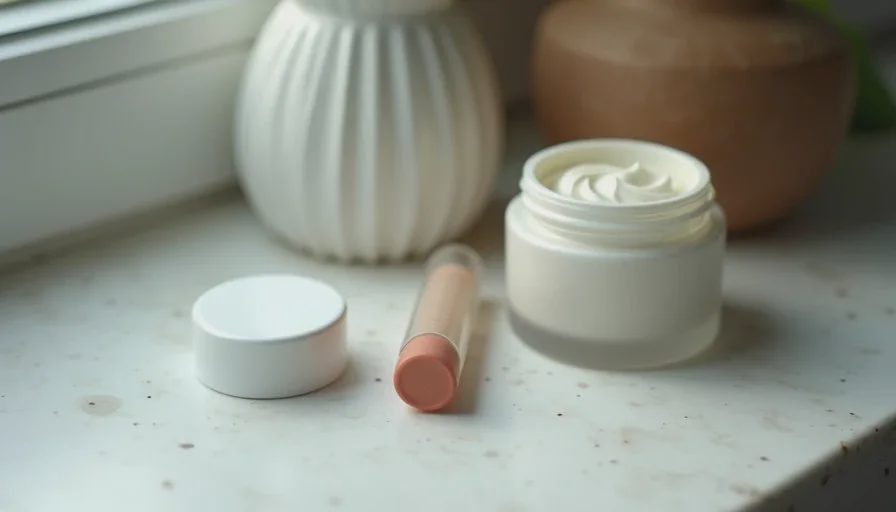
Some mornings the most honest face is one that shows you did not sleep enough. Makeup can soften that reality. It does not have to erase it completely. A thin layer of concealer, a touch of cream blush, and clean mascara often move the needle enough without demanding a full transformation.
I used to feel I needed to hide every sign of fatigue before leaving the house. I no longer do. Looking a little tired is a normal human state, not a professional failure.
Permission to Skip Steps
Not every workday requires the same level of makeup. A client-facing presentation might call for more attention. A quiet desk day might need almost none. Treating every morning as if it demands the same polished result is a form of pressure that adds little value.
I keep a short mental list of the highest-impact steps for my own face. On limited mornings I protect those and release the rest. The result is still presentable. It is simply not maximal.
Permission to Be Visible in the Process
There is no requirement that makeup look as if it applied itself. A soft wash of cream blush that is clearly cream blush is fine. A lip color that is clearly a lip color is fine. The idea that everything must appear unstudied often leads to more studying, not less.
How This Changes the Way I Write About Makeup
When I share routines or product notes on this site, I try to keep the language free of the effortless promise. I talk about what holds up under office lights, what fits into limited time, and what still looks like a real face by late afternoon. I do not claim that any routine will make someone look like they woke up polished.
I also try to leave room for ordinary days. Not every post needs to solve for the most refined version of a look. Some days the useful advice is the shorter list, the lighter hand, or the reminder that showing up is enough.
The Difference Between Care and Performance
There is a distinction I return to often. Taking care of your face can be a form of steadiness. Performing a certain aesthetic every day can become a form of pressure.
Care might look like moisturizing when skin feels tight, using concealer where it helps you feel more awake, or choosing a lip color that makes you feel finished. Performance tends to focus on how the result will be interpreted by others and whether it meets an invisible external standard.
I am not against care. I am against the version of beauty that treats ordinary human variation—tiredness, texture, unevenness—as something that must be constantly managed out of sight.
What I Tell Myself on the Heavier Mornings
On the mornings when the gap between how I feel and how I think I should look feels widest, I use a short internal reminder: I do not need to look effortless. I need to look like I showed up.
That single sentence lowers the temperature. It makes the next actions clearer. Moisturizer. A little brightness where it counts. Soft color. Mascara if I have the seconds. Lip balm or a simple tint. Then out the door.
The face that results is not a magazine face. It is a workday face. That is sufficient.

A Quieter Kind of Confidence
Confidence in this context does not mean feeling radiant every morning. It means moving through the day without adding an extra layer of self-critique about whether the makeup looks studied or undone enough.
Pretty is lovely. Practical is better. And ordinary is allowed.
You do not need to look effortless every single day. You do not need to hide the fact that some mornings take more effort than others. You do not need to treat visible tiredness as a problem that must be solved before you are allowed to be seen.
Looking like yourself—slightly polished, slightly imperfect, present—is a solid place to land. It is also a far more sustainable standard for the long stretch of workdays that make up most of life.



No comments yet — be the first to share a thought.