
Some beauty advice assumes a baseline of energy that many women do not have on ordinary mornings. It speaks as if time, sleep, and emotional bandwidth are unlimited. When the person listening is already tired, that advice does not land as helpful. It lands as another demand.
I have spent enough years listening to women at the beauty counter, and enough mornings living the same constraints myself, to know which suggestions I will not offer. This post is a clear list of the advice I refuse to give to anyone who already feels worn down.
Advice That Adds Weight Instead of Relief
“Just wake up twenty minutes earlier.”
This is one of the most common recommendations for people who say they have no time for makeup or skincare. It treats sleep as negotiable and the routine as non-negotiable. For someone who is already short on rest, trading sleep for a longer beauty routine is rarely a net gain. The face may look slightly more polished. The person often feels worse.
I will not suggest that a tired woman give up more sleep to accommodate more steps. If the routine cannot fit into the time that already exists, the routine needs to shrink, not the night.
“You just need a better under-eye concealer.”
Concealer can reduce the appearance of shadows. It cannot repair the fact that someone is exhausted. When advice jumps straight to a product solution for tired eyes, it skips the larger context. It also risks sending someone toward heavier coverage that can crease and emphasize texture once the day progresses—especially under office lighting.
I will mention concealer as one optional tool. I will not present it as the primary answer to looking tired.
“Try this seven-step morning skincare routine.”
Multi-step routines can be satisfying when energy and time are available. When they are not, a long list becomes a source of quiet failure. Each skipped step can feel like evidence that the person is not taking care of herself properly.
I will never hand a tired woman a long sequence as the baseline for acceptable care. One or two products that feel supportive are enough on depleted days. The rest can wait.
“Don’t leave the house without mascara / brows / lip color.”
Rules that treat specific products as mandatory create pressure. They turn ordinary mornings into a checklist that must be completed before the person is allowed to be seen. For someone already running on limited reserves, those rules add friction without adding real value.
I will never tell a tired woman that she is incomplete without a particular product. Showing up is enough.
What I Offer Instead
Permission to do less
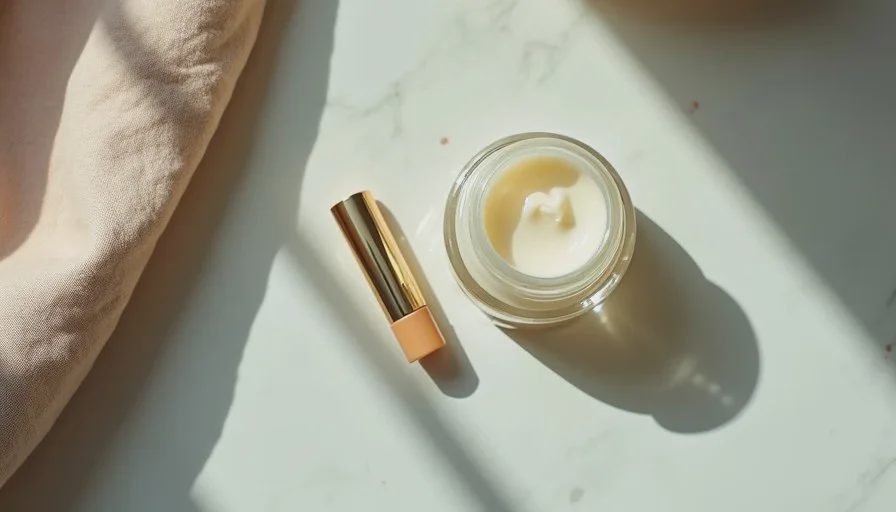
On the mornings when energy is low, the most useful beauty advice is often subtractive. Moisturizer. A thin layer of concealer only where it helps. Cream blush if there is time. Mascara if it feels worth the seconds. Lip balm. That can be the entire routine. It is still a form of care. It simply matches the resources available.
Permission to look tired
Exhaustion is visible on faces. Makeup can soften it. It does not have to erase it completely. Trying to eliminate every sign of tiredness often requires more product and more time, which can leave the person feeling more strained rather than more polished.
I would rather someone leave the house looking a little tired and a little more comfortable than looking perfected and more depleted.
Permission to skip the “polished” standard for a day
Not every workday requires the same level of finish. A quiet desk day or a series of video calls from home can tolerate a much lighter hand. Treating every morning as if it demands a fully considered face is a form of pressure that many tired women do not need.
The standard can flex. The day still counts.
Why This Stance Matters
Beauty advice that ignores fatigue treats the face as a project that must be managed regardless of the state of the rest of the person. That approach can turn care into another form of work. When someone is already carrying a full load, additional work is rarely what helps.
I learned this both from the women who sat in my chair at the counter and from my own ordinary mornings. The suggestions that landed most gently were the ones that reduced decisions and removed obligations. The suggestions that landed most heavily were the ones that assumed unlimited capacity.
The difference between support and performance
Supportive advice helps the person feel a little more like themselves with the energy they actually have. Performance-oriented advice pushes them toward an appearance standard that requires energy they do not currently possess. I try to stay on the supportive side of that line.
A tinted balm that makes someone feel finished is support. A multi-product eye look presented as the minimum for looking professional is often performance.
Practical Alternatives I Will Offer
If a tired woman asks for help, these are the kinds of things I will say instead:
Use the moisturizer you already like and stop there if that is all you have capacity for today.
If under-eye shadows bother you, a thin wash of concealer is enough. You do not need full coverage.
Cream blush takes almost no time and can make the whole face look more awake without precision.
Mascara is optional. Clean brows and a bit of color on the lips can carry a face on low-energy days.
If even that feels like too much, wash your face, put on balm, and leave. You are still allowed to be seen.
None of these suggestions require waking up earlier, buying a new product, or treating tiredness as a personal shortcoming.

What I Hope This Protects
I hope it protects the mornings when the most honest thing a face can do is show that its owner is human and limited. I hope it protects people from the quiet shame that comes from failing to complete a routine that was never designed for depleted days. I hope it makes room for care that is proportional to capacity.
Makeup and skincare can be sources of steadiness. They become sources of pressure when the advice around them refuses to acknowledge fatigue as a real constraint.
Final Thoughts
I will never tell a tired woman to wake up earlier so she can do more to her face. I will never suggest that the right concealer will solve the problem of exhaustion. I will never hand her a long list of steps and treat it as the baseline for acceptable self-presentation. I will never imply that she is incomplete without mascara, perfect brows, or a full base.
What I will offer is simpler and smaller. Permission to do less. Permission to look like she feels. Permission to treat care as something that can shrink to fit the day rather than something that demands the day expand to fit it.
Pretty is lovely. Practical is better. And on the mornings when practical means almost nothing at all, that is still allowed.
You do not have to earn the right to be seen by first erasing the evidence that you are tired. Showing up is already enough.



No comments yet — be the first to share a thought.