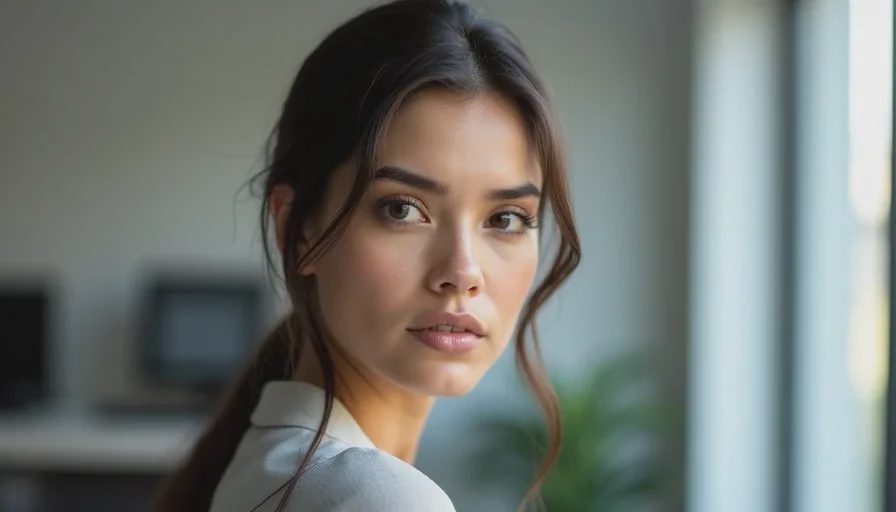
A lot of makeup is created, photographed, and reviewed under conditions that have little to do with ordinary life. Ring lights, carefully chosen angles, softbox setups, and post-production editing can make almost any product look impressive. The same product can look flat, creased, or unnatural once it meets fluorescent office lighting, dry air, and a full day of real movement.
I am not interested in that version of makeup. I care about what holds up when the lighting is ordinary and the day is long. This post is a clear statement of that preference and the reasons behind it.
The Camera Version of Beauty
Camera-ready makeup often prioritizes contrast, dimension, and surface perfection that read well through a lens. Heavy contour, strong highlight, precisely cut creases, and full-coverage bases can create a striking image. Under controlled lighting those choices make sense.
The problem arises when the same techniques and products are presented as everyday recommendations. Most people do not spend their workdays under ring lights. They sit under overhead fluorescents, stand in mixed office lighting, or move between conference rooms and computer screens. Makeup that depends on perfect illumination frequently loses its structure in those environments.
I saw this gap constantly when I worked behind the beauty counter. Customers would show me images of looks they wanted to recreate for work. The original photos were taken under conditions that could not be repeated in their actual workplaces. The products that created those images often disappointed once the lighting changed.
What “Works on Camera” Usually Requires
Makeup that performs primarily for the camera tends to rely on several elements that are less helpful in daily life:
Higher coverage that can look mask-like under fluorescent lights
Strong contour and highlight that disappear or turn muddy in flat lighting
Precise eye shapes that require steady hands and extra time
Finishes that photograph as luminous but can emphasize texture in person
These choices are not inherently bad. They simply solve for a different problem. When the goal is a still image or a short video under controlled lights, they can be effective. When the goal is a face that looks presentable from 8 a.m. to 6 p.m. in an office, they often become liabilities.
The Standard I Use Instead
I evaluate makeup by how it behaves under the conditions most of the women I know actually face. That means office lighting, air conditioning, coffee, talking, face-touching, and the gradual passage of hours.
A product earns its place if it still looks like skin or like a soft, intentional version of a face by late afternoon. It loses points if it only looks impressive in the first hour under flattering light.
This standard changes what I reach for and what I recommend. I prefer formulas that fade evenly rather than crease deeply. I prefer finishes that stay comfortable rather than those that deliver maximum drama for a short window. I prefer techniques that can be done quickly and still look coherent without perfect precision.
Real Lighting Is the Real Test
Bathroom lighting and store lighting are both more forgiving than most office environments. Fluorescent tubes can make cool undertones look ashy and warm undertones look sallow. They can also exaggerate texture and settle product into fine lines more visibly than soft natural light.
When I test a foundation, concealer, blush, or lip color, I want to know how it appears under those less flattering conditions. If it only looks good in a carefully lit mirror, it has not yet proven itself for workday use.
Time and Movement Matter
Makeup that requires frequent adjustment is less useful for people who move through meetings, calls, and focused work blocks. A product that looks polished at application but needs attention every two hours creates more friction than it removes.
I pay attention to how formulas respond to talking, drinking, and the small habitual gestures most people make without noticing. The ones that stay relatively stable without constant maintenance are the ones I keep.
Why This Distinction Matters for Everyday Advice
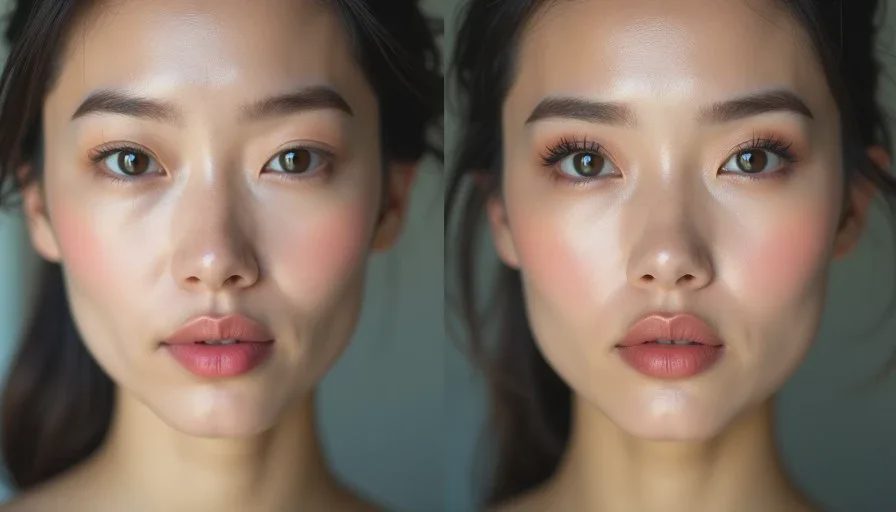
When beauty content collapses the difference between camera performance and real-life performance, it creates quiet pressure. People try to recreate results that were never designed for their lighting or their schedules. They then experience the gap as a personal shortcoming rather than a mismatch of context.
I prefer to keep the contexts separate. There is a place for editorial makeup, for photography, and for carefully produced content. There is also a place for the quieter work of finding products and routines that support ordinary days. The second category is the one this site exists to serve.
The Cost of Chasing Camera Results
Trying to maintain a camera-ready finish through a full workday often means more product, more time, and more mid-day correction. It can also mean choosing formulas that feel less comfortable in exchange for a stronger initial effect.
On the mornings when energy is already limited, that trade-off is rarely worth it. A simpler routine that still looks intentional under office lights usually serves the day better than an ambitious one that begins to break down by lunch.
What I Reach for Instead
The products that remain in my own rotation share a few traits. They apply quickly. They look like skin or like soft color rather than like heavy makeup. They fade in a way that still appears coherent rather than patchy or creased. They do not require perfect technique to look acceptable.
None of them are designed to deliver maximum impact under ring lights. All of them are chosen because they still look reasonable when the lighting is ordinary and the hours have added up.
This is not a rejection of skill or of more elaborate makeup. It is a refusal to treat camera performance as the default standard for everyday recommendations.

A Clearer Way to Read Beauty Content
When you encounter a makeup recommendation, it is worth asking under what conditions the result was achieved. Was the lighting controlled? Was the image edited? Was the wear time only the first hour?
Those questions do not make the content useless. They simply place it in the right category. Advice generated under camera conditions can still offer technique ideas or color inspiration. It should not be mistaken for proof that the same product will perform the same way in an office from morning until evening.
I apply the same filter to my own writing. If I describe a product or a routine, I try to be clear about the conditions under which I tested it. Office lighting, dry air, and full workdays are the baseline. Anything else is noted as an exception.
Final Thoughts
I am not interested in makeup that only works on camera because most of life does not happen on camera. The face I need to live with is the one that moves through ordinary rooms, ordinary light, and ordinary hours.
Pretty is lovely. Practical is better. And practical, in this context, means a result that still looks like a real person by the time the workday is ending.
If a product requires ring lights and careful angles to look its best, it may still have a place in someone’s collection for specific uses. It does not earn a permanent place in the routines I write about here. The standard remains simple: if it only works under perfect lighting, it does not really work for the days most of us actually have.


No comments yet — be the first to share a thought.