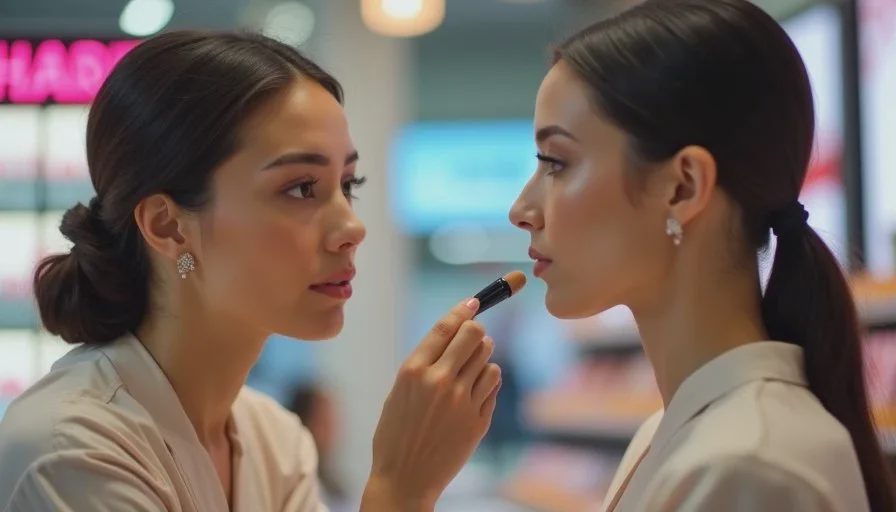
Shade matching was one of the most frequent requests I received during my years behind the beauty counter. Women would sit down, point to a product, and ask for the right color. Sometimes they already had a shade in mind from an online quiz or a previous purchase. Sometimes they had no idea where to start.
After matching hundreds of faces under store lighting and then hearing what happened once those products left the building, I developed a clearer sense of what actually works and what commonly goes wrong. This post collects the practical lessons that still shape how I think about foundation and base products today.
The Biggest Gap: Store Lighting Versus Real Life
Department-store beauty lighting is designed to make skin and makeup look their best. It is usually bright, even, and slightly flattering. Office lighting, bathroom lighting at home, and natural daylight are rarely the same.
A foundation that looked perfect under the counter lights could appear too pink, too ashy, or too dark once the customer stepped outside or sat under fluorescent tubes at work. I saw this repeatedly. The match was not always wrong in the store. It was incomplete because it had only been checked in one environment.
The most useful habit I developed was to check a potential shade in more than one light whenever possible. If a customer could walk toward a window or step into a different part of the floor, the difference often became obvious.
Undertone Is More Important Than Surface Depth
Many people focus first on whether a foundation is light, medium, or deep. That matters, but undertone mismatches show up faster and look more unnatural once the product is worn for a few hours.
I learned to look at the veins on the inner wrist, the color around the jawline, and how the skin responded to different lighting. Cool undertones often pulled pink or red. Warm undertones pulled yellow or golden. Olive and neutral undertones sat in between and were easy to miss if I relied only on a quick glance.
When a foundation looked slightly off even though the depth seemed right, undertone was usually the reason. A cool shade on warm skin could turn grayish by afternoon. A warm shade on cool skin could look sallow under office lights.
Common Mistakes I Saw Regularly
Matching Only to the Forehead or Cheek
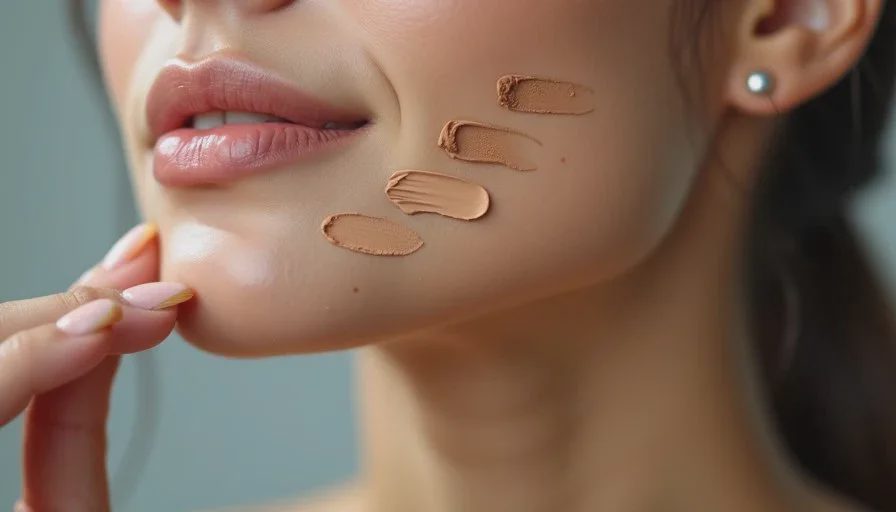
Some customers wanted the foundation to match the center of the face where redness or discoloration was strongest. That approach often produced a shade that looked too dark or too opaque on the rest of the face and neck. I found it more reliable to match toward the jawline and then address redness separately with concealer if needed.
Choosing a Shade That Only Worked in the Store
A foundation that disappeared perfectly under bright counter lighting sometimes oxidized or revealed its true tone later. I started warning people that the first hour of wear at home or at work was part of the test. If the shade shifted noticeably, it was worth exchanging rather than forcing it.
Ignoring Neck and Chest
A face that matched the foundation while the neck remained a different color created a visible line, especially under natural light or in photos. I encouraged customers to blend a small amount down the neck and check the result in daylight when possible.
Assuming Expensive Meant Better Match Range
Prestige brands sometimes offered more refined undertone options. Sometimes they did not. I saw excellent matches in both drugstore and prestige lines, and I also saw gaps in both. Price did not guarantee a wider or more accurate shade range for every skin tone.
What Actually Helped Me Get Better Matches
Looking at the Skin in Motion
Static matching under a fixed light only told part of the story. Asking someone to turn their head, step toward different lighting, or simply talk for a minute often revealed whether the shade still blended. Foundation that looked good only when the face was still frequently failed in normal movement.
Testing on Clean Skin When Possible
Residual makeup, heavy moisturizer, or leftover sunscreen could alter how a foundation appeared. When time allowed, I preferred to match on skin that was clean or only lightly moisturized. The result was closer to how the product would behave in a real morning routine.
Paying Attention to Oxidation Patterns
Some formulas darkened after twenty to thirty minutes. Others stayed stable. I learned to watch for this during longer consultations and to mention it when a customer was deciding between two close shades. Choosing the slightly lighter option sometimes solved the problem if oxidation was expected.
Accepting That No Single Shade Is Perfect in Every Light
Even a good match will look a little different under fluorescent office lights, warm evening bulbs, and midday sun. The goal is a shade that stays believable across those conditions rather than one that is flawless only in the store.
Lessons That Transfer to Everyday Buying
You do not need a beauty counter to apply some of these principles.
Check foundation near a window or in the lighting you actually live and work in.
Compare the shade along the jawline rather than only on the back of the hand or the center of the face.
Give the product time to settle before deciding it is perfect.
If the undertone feels slightly off, it will usually become more obvious after a few hours of wear.
I also encourage people to keep the receipt and the original packaging until they have worn the foundation through a normal day. A match that fails under office lights is easier to exchange than one that has already been half used.
How Shade Matching Influences the Rest of the Routine
A foundation that is even slightly too dark or too cool often leads people to add more powder, more bronzer, or more blush to compensate. The makeup becomes heavier than it needs to be. A closer match usually allows a lighter hand with everything else.
This is one reason I still prefer sheer to medium coverage for most workdays. When the shade is close, less product is required to even the skin, and the finish stays more natural under fluorescent lighting.

What I Tell People Now
When someone asks how to find the right foundation shade, I keep the advice simple.
Match as close to the jawline as you can.
Check the color in more than one light source.
Watch for undertone shifts after the product has been on the skin for a while.
Prioritize a shade that looks like skin over one that looks perfect only under bright store lights.
The best matches I ever made were not the ones that created the most dramatic before-and-after in the mirror. They were the ones women came back for because the foundation still looked like their skin at the end of a normal day.
That standard has not changed for me. Whether the product costs twenty dollars or fifty, the question remains the same: does this shade still look believable when the lighting is ordinary and the day has been long? If the answer is yes, the match is doing its real job.


No comments yet — be the first to share a thought.